
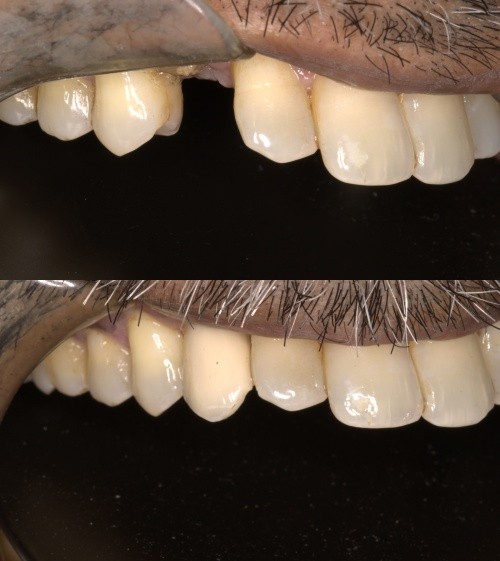
“I avoided smiling in photos for three years. Finally, it is a relief.” – That’s what 42-year-old Anant from New Town, Kolkata, told us after his dental implant procedure. Although the final result was shocking to him (in a pleasant way), the real surprise was everything he didn’t know about implants before.
If you’re reading this after searching “dentist near me” or “dental implants,” you’re probably at a crossroads. Maybe you’ve lost a tooth. Maybe your old dentures are making you miserable. Or perhaps you’re just tired of that gap in your teeth, which keeps showing during work presentations or family functions. Slowly it makes you feel not so confident like before.
Let’s talk about what really happens with dental implants – the good, the practical challenges (the bad), and the questions most people don’t think to ask until it’s too late (the ugly).

Lets go!
Why Dental Implants Are Different (And Why That Matters)
Here’s something interesting: your body treats a dental implant like it’s part of you. Isn’t that something?
Unlike dentures that sit on your gums or bridges that depend on support from other teeth, an implant is strong, fiercely independent and modern, just like you. It actually fuses with your jawbone through a process called osseointegration.
Think of it like this – when you plant a tree, it doesn’t just sit in the soil. Its roots grow deep, intertwining with the earth until you can’t tell where the tree ends and the ground begins. That’s essentially what happens with the titanium implant post in your jaw over 3-6 months.
But here’s what most people don’t realize: this biological process is exactly why implants work so well, and also why they require patience. There’s no shortcut to bone integration.
What Actually Happens to Your Mouth When You Lose a Tooth?
Most people searching for a dental clinic in New Town Kolkata or anywhere else don’t know about the domino effect of tooth loss. Let me explain.
When you lose a tooth, your jawbone starts shrinking within the first year. Why? Because bone is living tissue that needs stimulation from food to stay healthy. When there’s no tooth, it means no food will stimulate your bone while you chew, Your body thinks, “We don’t need bone here anymore” and starts taking it away.
This creates a cascade of problems:
Your remaining teeth start shifting into the gap,
Your bite changes, causing jaw pain,
Your facial structure begins to collapse inward (that “sunken” look, that some elderly people have)
Adjacent teeth become weaker and more prone to problems. It simply means more discomfort, more side effects and greater loss of time and money in near future.
A 58-year-old patient who came to our dental clinic in New Town Kolkata once asked, “Why didn’t my previous dentist tell me this ten years ago, when implants have been there for past 60 years?” It’s a fair question. Perhaps a part of dentist community was being too cautious to proceed with! Now that it is proven beyond doubt that implants are GOAT ( Greatest of all time)😄, the earlier you address tooth loss, the simpler is the solution.
What Makes a Good Candidate for Dental Implants?
Not everyone can get an implant immediately, and honest dentists will tell you this upfront. Here’s what matters:
Adequate Bone Density: You need enough healthy jawbone to support the implant. If you’ve had a missing tooth for years, you might need bone grafting first. Think of it as laying a strong foundation before building a house.
Good Overall Health: Certain conditions like uncontrolled diabetes , heavy smoking can interfere with result. This doesn’t mean you can’t get implants, but it means you need different kind of implants, special care and few specific medicines.
Healthy Gums: Active gum disease needs treatment before implant placement. Otherwise, it’s like trying to plant a tree in diseased soil.
Realistic Expectations: The process takes months, not days. If you need an immediate solution for a wedding next week, implants aren’t the answer (though other solutions exist).Age: Very Young individuals must wait till adulthood, to receive an implant. While older adults can have an implant, if they are otherwise healthy
The Real Timeline:
Let’s be honest about timelines, because this is where expectations often clash with reality.
OPTION A:- (Super-Implant mode)
As a well aware person since you have visited your doctor promptly, it makes all the difference, as, one can now go for The Immediate Implant. It serves you best, it saves your time and money.
Month 1: : Initial consultation, X-rays, CT scans, treatment planning, Diseased tooth extraction and immediate placement of an Implant on the same day. A seamless single day procedure, amazing right? Everything will be done under anesthesia, you do not feel anything, no hospital admission, the procedure typically takes 1-2 hours. Most people return to work the next day.
Sometimes doctor fixes a temporary tooth on Implant on the same day, for cosmetic purpose.
Month 2: Only a follow-up visit if necessary, you bone grows around your implant. You keep working and keep smiling like a champion.
Month 3: You get what you deserve, a beautiful confident smile.
But honestly, not all dental clinics you find through “ Dentist near me” ad, are equipped with the expertise.
In that case you might opt for option B.
OPTION B:- (Conventional Implant)
Month 1: Initial consultation, X-rays, CT scans, treatment planning. If bone grafting is needed, this happens now and it adds 3-4 months to your timeline.
Month 2-3: Implant placement surgery. You’ll have local anesthesia, the procedure typically takes 1-2 hours. Most people return to work the next day, though you’ll stick to soft foods for some time.
Months 3-6: The waiting game. This is osseointegration – your bone growing around the implant. You might have temporary teeth during this time, but the implant itself remains buried under your gum, healing.
Month 3-7: Abutment placement (the connector piece) and crown fitting. This is when you finally see your new tooth.
Total timeline: 3-4 months on average. Some cases take longer, very few take less time. Anyone promising you faster results should be taken with a pinch of salt.
Questions to Ask Before Choosing a Dental Clinic in New Town Kolkata (or Anywhere)
Walking into a consultation armed with the right questions changes everything. Here’s what experienced patients wish they’d asked:
“How experienced is the team for implant procedures?”
“ How frequently and how many implants does the team perform?”
You want someone who’s done hundreds, not dozens. Experience matters when complications arise.
“What’s your success rate, and how do you define success?”
The global average is 95-98%.Nobody is perfect, we are only humans. If someone claims 100% success, they’re either incredibly selective about patients or they are not being truthful to you.
“What brand of implants do you use, and why?”
Reputable brands like Biohorizons, Nobel Biocare, or Dentium have decades of research. Cheaper alternatives might save money initially, but might lack long-term success.
“What happens if the implant fails?”
A good dentist will have a clear policy. Some offer re-treatment, others don’t. Know this before you start.
“Can I see before-and-after photos of similar cases?”
This shows both their work quality and whether they’ve handled cases like yours.
The Cost Reality in India
Let’s address the elephant in the room. Dental implants in Kolkata typically range from ₹25,000 to ₹50,000 per tooth, depending on the brand, clinic location, and case complexity.
Premium European implants cost more than Korean alternatives. Complex cases requiring bone grafting or sinus lifts add to the cost.
Here’s what you’re actually paying for:
1)The implant fixture (the screw part)
2)The abutment (connector)
3)The crown (visible tooth part)
4)Surgical expertise
5)Multiple visits of professional time, over months.
6)Follow-up care.
7)Technology (CT scans & treatment planning)
Many dental clinics offer EMI options through Bajaj Finserv, HDFC, or other lenders. Some accept credit cards with 3-6 month no-cost EMI. Ask about payment flexibility during your consultation.
Life After Dental Implants: What Changes?
Here’s what patients tell us changes after getting implants:
They bite into apples again. They stop covering their mouth when laughing. They eat street food without worry. They stop avoiding photos. Small things, perhaps, but these small things add up to living fully.
One gentleman who got implants at age 65 said, “I wish I’d done this ten years ago instead of struggling with dentures.” Another patient in her 30s mentioned how it affected her career confidence during client meetings.
The maintenance is straightforward – brush, floss, and regular dental visits, just like natural teeth. No special cleaning solutions, no removing them at night, no adhesives.
Making Your Decision
If you’re still reading, it means you are focussed and determined. You deserve nothing but best. Dental implants are a significant investment of time and money, and you should be informed.
The best next step? Visit a reputable dental clinic – whether it’s in New Town Kolkata or your neighborhood -and get a proper evaluation. Ask the hard questions. Look at their work. Talk to their previous patients if possible.
Your smile is worth the research.
Looking for expert guidance on dental implants? Smilestone Dental Care in New Town, Kolkata specialises in advanced implantology with experienced specialists and modern technology. Book a consultation to discuss your specific case.